
Study: Praying with Müller – Bold Prayers
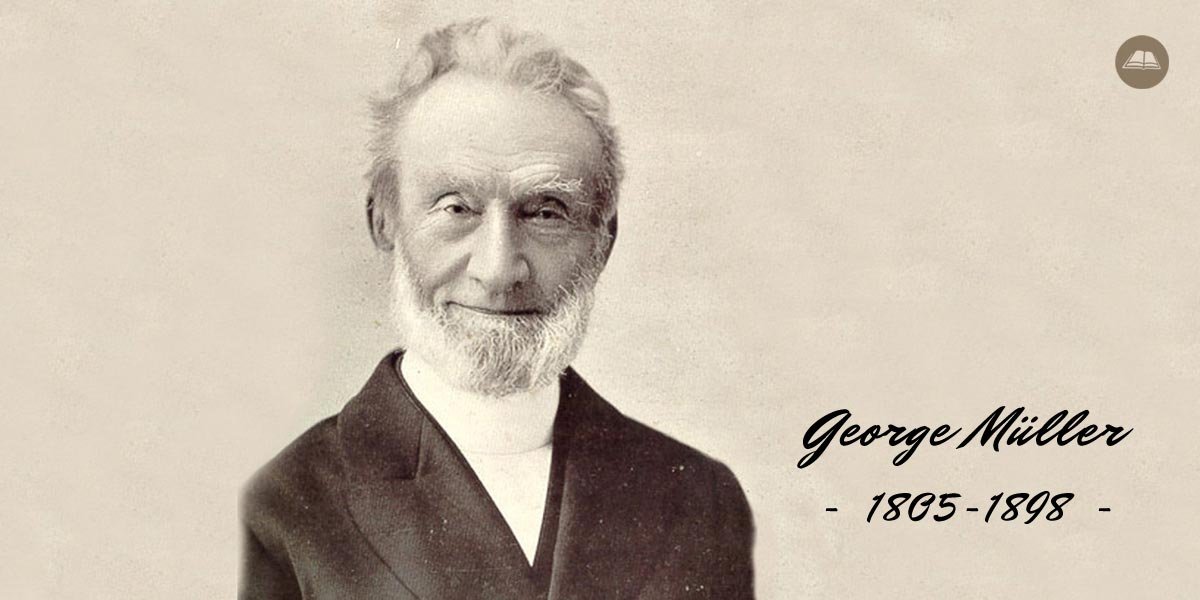
This is a Bible Study I did for Senior Adult Bible School on January 21, 2026.
Introduction
My new favorite Bible passage...
Jonah 2
Jonah 2.7 | As my life was fading away, I remembered the Lord, and my prayer came to you, to your holy temple. (CSB)
Even when faith has been weak and obedience has failed...
The door of prayer remains open!
Jonah did not pray from strength or success...
Prayer is still heard when faith is faint and obedience has broken down.
`Prayer does not require a spotless record...
Only a glimmer of faith strong enough to cry to him!
Today we will learn the importance of bold prayer.
Hebrews 4.16 | Therefore, let us approach the throne of grace with boldness, so that we may receive mercy and find grace to help us in time of need. (CSB)
Hebrews 10.19 | Therefore, brothers and sisters, since we have boldness to enter the sanctuary through the blood of Jesus— (CSB)
Ephesians 3.12 | In him we have boldness and confident access through faith in him. (CSB)
1 John 5.14 | This is the confidence we have before him: If we ask anything according to his will, he hears us. (CSB)
Job 22.26 | Then you will delight in the Almighty and lift up your face to God. (CSB)
Job 22.27 | You will pray to him, and he will hear you, and you will fulfill your vows. (CSB)
A Beautiful Example Portrait of Bold Prayer is the Life of George Müller.
Biography
Books to read...
The Autobiography of George Muller, by Muller
George Muller: Delighted in God, by Roger Steer
Childhood
Born in 1805 in Prussia (modern Germany).
Raised in a nominal Lutheran environment.
Rebellious and worldly youth...
`Openly dishonest, rebellious, and morally reckless...
`Known for lying, stealing, gambling, and drunkenness...
Once imprisoned briefly as a teenager for theft...
Attended the University of Halle
Known for Enlightenment Rationalism
Beginning of theological liberalism we see today...
ER did not deny Christianity.
But it introduced a new authority structure.
Human reason is the final judge of truth.
Though Muller was a theology student, he would not have heard the gospel at Halle.
How do Muller come to know the Lord?
In 1825, while at the university, a fellow student who was a Christian invited Muller to a small gathering in someone's home.
He found them reading the Bible, praying, singing...
No ceremony, no show...
Muller didn't grasp their teaching of justification by faith.
But he was drawn in by the faith and attitude of the others.
What affected him most:
Their seriousness about God...
Their peace and joy...
Their confidence in Scripture...
Their natural dependence on prayer...
Muller began reading the Bible devotionally (for the first time)...
Convicted of his sin...
Convinced of justification by faith...
Responded...
Early Ministry Formation
Abandoned rationalism and embraced...
Authority of Scripture...
Justification by faith alone...
Necessity of personal conversion...
Desired to serve as a missionary overseas...
Moved to England in 1829.
Became fluent in English.
Married Mary Groves in 1830.
Poor health kept him from serving overseas as a missionary.
Formal Ministry Begins
Became pastor of a small chapel in Teignmouth, England.
`Quickly grew dissatisfied with:
`Fixed pew rents…
`Dependence on guaranteed salary…
Became convinced that:
Ministry should not be sustained by coercion or pressure…
God’s work should be supported by God’s people moved freely by God…
Made a decisive and controversial choice:
Abolished pew rents.
Refused to solicit funds.
Chose to trust God alone for provision.
This marked the beginning of:
A lifelong commitment to living by prayer…
A public experiment in dependence on God…
A Theology of Prayer Takes Shape
Came to believe prayer was:
Not a last resort…
Not a religious formality…
But the primary means by which God delights to work…
Developed several convictions that shaped his life:
God answers specific prayer.
God is never late.
God’s faithfulness is displayed most clearly over time.
Prayer is meant to glorify God, not the one praying.
Began carefully recording:
Requests made in prayer…
Dates…
Outcomes…
Delays…
Clear answers…
The Orphan Work Begins
In the early 1830s, burdened by:
Widespread child poverty in Bristol…
Orphans being exploited, neglected, or trained for crime…
Believed God was leading him to:
Care for orphans…
And to do so in a way that visibly demonstrated God’s faithfulness…
Opened the first orphan house in 1836.
With no endowment.
No fundraising campaigns.
No public appeals.
Only prayer.
Made a deliberate decision:
Never to ask people directly for money.
Never to incur debt.
Never to pressure donors indirectly.
A Life Marked by Answered Prayer
Over the decades:
Cared for more than 10,000 orphans.
Received millions of dollars (in modern terms), all unsolicited.
Saw daily, specific answers to prayer.
Famous instances include:
Food arriving the morning it was needed…
Money arriving the day bills were due…
Clothing, coal, and supplies provided at the last moment…
Yet Müller consistently emphasized:
The normal answers more than the dramatic ones…
God’s quiet faithfulness as much as his spectacular provision…
Personal Loss and Sustained Faith
Mary (Grove) Müller, his beloved wife, died in 1870.
After 39 years of marriage.
`Müller grieved deeply…
`Yet testified to God’s goodness without bitterness.
`Continued his work:
`With undiminished trust…
`With steady joy…
`With unshaken confidence in God’s care…
Later Years and Global Influence
In his later decades:
Traveled extensively around the world…
Preaching, teaching, and testifying to God’s faithfulness…
`Traveled through:
`Europe…
`North America…
`Asia…
`Australia…
`Often traveled in his 60s, 70s, and even 80s…
`Proclaiming not himself…
`But a faithful, prayer-hearing God…
Death and Legacy
Died in 1898 at the age of 92.
`Left behind:
`No personal fortune…
`No institutional empire…
`No fundraising system…
`But left a lasting testimony:
`That God hears prayer.
`That God can be trusted.
`That bold prayer, offered humbly over decades, brings glory to God.
Prayer Testimonies (Copied from biographies)
Coal in the Depth of Winter
During one particularly cold winter, the orphan houses faced a crisis. The coal supply was exhausted, the temperatures were bitter, and the children were at risk of exposure.
Müller did not notify supporters or issue urgent appeals.
Instead, he brought the matter before God in prayer, laying the need plainly before him.
That very day, an unsolicited gift arrived, marked specifically for the purchase of coal.
The timing was exact, and the amount sufficient.
Müller later remarked that God often answered prayers not merely generously, but precisely—meeting the specific need at the precise moment it arose.
The Envelope with the Exact Amount
On many occasions, Müller recorded praying for a specific financial need—sometimes wages, sometimes food, sometimes repairs.
He learned, through Scripture, to pray precisely.
Time and again, envelopes arrived anonymously, containing exactly the amount required.
Not more. Not less.
Müller did not interpret this as coincidence.
He understood it as divine attentiveness—a Father responding to definite petitions offered in trust.
These gifts often arrived at the last possible moment, when all other means were exhausted.
Müller believed God delayed not to test faith, but to deepen it.
A Child at Death’s Door
Illness was a constant threat in orphan care, and medical knowledge was limited.
When a child fell gravely ill, Müller prayed earnestly—but never presumptuously.
He asked God to heal, yet submitted fully to God’s will.
In one such case, the child recovered unexpectedly, confounding medical expectations.
Müller never built a theology of guaranteed healing.
He believed prayer was an act of trust, not control.
When healing came, he gave thanks.
When it did not, he bowed in humility.
His confidence was not in outcomes, but in God’s wisdom.
Prayer Lessons from the Life of George Müller
I. Pray specifically, but trust God with the details.
Matthew 6.11 | Give us today our daily bread. (CSB)
Müller was always specific in what he asked for but he trusted God with the means and the details.
Morning with No Breakfast... (copied)
One morning in Bristol, the children at the orphan house sat quietly at long wooden tables.
There was no bread in the pantry.
No milk in storage. No money in hand.
The kitchen was empty. Müller did not delay the meal or excuse the children. Instead, he asked them to sit, folded his hands, and thanked God for the food He would provide.
Moments after the prayer ended, there was a knock at the door. A local baker stood outside, apologetic and earnest. He explained that he had not slept the night before and felt compelled—without knowing why—to rise early and bake bread for the orphans. He brought enough loaves to feed them all. Before the bread was fully distributed, a second interruption followed. A milk cart had broken down directly in front of the orphanage. The driver explained that the milk would spoil before repairs could be made and asked whether the children could use it. That morning, the children ate well. Müller recorded the event without flourish. For him, it was not spectacle—it was daily dependence.
How do we often fail at this?
Pray to general...
Stubborn about the ways and means...
How to pray with specificity...
II. Pray persistently.
Luke 18.1 | Now he told them a parable on the need for them to pray always and not give up. (CSB)
Luke 18.2 | “There was a judge in a certain town who didn’t fear God or respect people. (CSB)
Luke 18.3 | And a widow in that town kept coming to him, saying, ‘Give me justice against my adversary.’ (CSB)
Luke 18.4 | “For a while he was unwilling, but later he said to himself, ‘Even though I don’t fear God or respect people, (CSB)
Luke 18.5 | yet because this widow keeps pestering me, I will give her justice, so that she doesn’t wear me out by her persistent coming.’ ” (CSB)
Luke 18.6 | Then the Lord said, “Listen to what the unjust judge says. (CSB)
Luke 18.7 | Will not God grant justice to his elect who cry out to him day and night? Will he delay helping them? (CSB)
Luke 18.8 | I tell you that he will swiftly grant them justice. Nevertheless, when the Son of Man comes, will he find faith on earth?” (CSB)
Testimony
George Müller recorded that early in his Christian life he began praying regularly for the salvation of five specific friends.
He prayed for them by name
He prayed for them daily
He prayed for them consistently for more than 60 years
The timeline (this is what makes it powerful)
After about 5 years, the first friend was converted
After about 10 years, the second friend was converted
After about 25 years, the third friend was converted
The remaining two:
Never converted during Müller’s lifetime
Müller prayed for them until his death
After Müller died:
Both remaining men were converted
One shortly after his funeral
The other within a few years
III. Pray before acting, not after exhausting options.
James 1.5 | Now if any of you lacks wisdom, he should ask God—who gives to all generously and ungrudgingly—and it will be given to him. (CSB)
Testimony (copied)
Building Without Debt
As the orphan work expanded, Müller faced an enormous challenge. The existing facilities could no longer house the growing number of children. Large buildings would need to be constructed—structures that would cost sums far beyond what Müller had ever seen at one time. Yet he resolved on a principle that never wavered: he would not borrow money, and he would not ask anyone directly for funds.
Over the course of years, five massive orphan houses were built at Ashley Down. The funds arrived gradually—sometimes in large sums, often in small gifts—but always without solicitation. Every brick was paid for. Every building was completed without debt. When the final accounts were settled, Müller stood before a complex capable of housing thousands of children and owed no one a penny. The buildings themselves became monuments—not to financial ingenuity, but to patient prayer.
Notice that Müller did not fundraise first and then pray when it failed.
Prayer was not a solution to an eventual problem.
Prayer was step one!
IV. Pray Scripture-shaped prayers.
John 15.7 | If you remain in me and my words remain in you, ask whatever you want and it will be done for you. (CSB)
Testimony (copied)
George Müller learned early that the strength of prayer depends on what feeds it. After his conversion, he stopped reading the Bible merely to gain knowledge and began reading it to hear God’s voice. He read slowly, prayerfully, and personally, lingering until Scripture affected his heart. His aim was not to finish a passage, but to be shaped by it.
Müller discovered that when he tried to pray without first reading Scripture, his prayers became unfocused and driven by circumstances. But when prayer followed Scripture, his prayers gained clarity and confidence. The Bible gave him language to use, promises to trust, and reasons to hope.
He learned to turn Scripture directly into prayer. Promises became petitions. Commands became requests for grace. Warnings led to confession. Descriptions of God’s character became praise and trust. In this way, prayer was no longer something he initiated alone—it was a response to what God had already said.
Because his prayers rose out of Scripture, Müller prayed boldly without presumption. He did not ask God to do what God had not promised. He believed that appealing to God’s Word honored God’s faithfulness. Over decades, this simple pattern—Scripture first, prayer second—anchored his life of prayer and gave it endurance, depth, and quiet confidence.
V. Recognize peace as a genuine answer to prayer.
Philippians 4.6 | Don’t worry about anything, but in everything, through prayer and petition with thanksgiving, present your requests to God. (CSB)
Philippians 4.7 | And the peace of God, which surpasses all understanding, will guard your hearts and minds in Christ Jesus. (CSB)
2 Thessalonians 3.16 | May the Lord of peace himself give you peace always in every way. The Lord be with all of you. (CSB)
Testimony
Mary Müller had been George Müller’s wife for nearly forty years. She was his closest companion in ministry and life, deeply involved in the orphan work and beloved by the children. When she fell gravely ill, Müller prayed earnestly for her recovery. He did not pray lightly or indifferently. He asked God to heal her.
But alongside that request, Müller prayed something else.
He prayed that God’s will would be done, and that his own heart would remain fully at rest in God, whatever the outcome.
When Mary died, Müller did not collapse into despair or spiritual confusion. Instead, on the very day of her death, he stood and spoke words that startled many who heard them. He testified that God had answered his prayers—not by preserving Mary’s life, but by giving him deep, settled peace.
"The Lord is good, and gives me calmness of mind and perfect peace."
“I bow, I am satisfied with the will of my Heavenly Father. I seek by perfect submission to His holy will, to glorify Him.”
“My heart is at rest, and my heart is satisfied with God.”
Why does this testimony speak to us?
The circumstances did not improve...
But peace arrived before explanation...
VI. Value lifelong faithfulness over dramatic moments.
Hebrews 3.14 | For we have become participants in Christ if we hold firmly until the end the reality that we had at the start. (CSB)
Testimony
George Müller is remembered for dramatic answers to prayer, but his own emphasis was always elsewhere.
He repeatedly insisted that the greatest evidence of God’s faithfulness was not a momentary provision, but sustained trust over decades.
Müller's Life Goal:
“To show that God is faithful still, and hears prayer still.”
Conclusion
Big question...
What if the Lord is not answering my prayers like he did Müller's prayers?
The pat answers...
A. God may be answering differently than you expected.
Scripture
2 Corinthians 12.8 | Concerning this, I pleaded with the Lord three times that it would leave me. (CSB)
2 Corinthians 12.9 | But he said to me, “My grace is sufficient for you, for my power is perfected in weakness.” Therefore, I will most gladly boast all the more about my weaknesses, so that Christ’s power may reside in me. (CSB)
B. God may be working on a longer timeline than you can see.
C. God may be shaping you more than your circumstances.
Romans 5.3 | And not only that, but we also boast in our afflictions, because we know that affliction produces endurance, (CSB)
Romans 5.4 | endurance produces proven character, and proven character produces hope. (CSB)
D. God may be rejecting your motives.
James 4.3 | You ask and don’t receive because you ask with wrong motives, so that you may spend it on your pleasures. (CSB)
But maybe it is something else...
Everything is for the glory of God!
Have you noticed that God has blessed some faithful Christians with greater wealth than other Christians?
Ever noticed that God has blessed some faithful Christians with better health than other Christians?
All for the glory of God!
And answered prayers...
May God be blessed as we give thanks for answered prayers...
May God be blessed as we continue to pray and trust him when prayers are not answered!
Look at the Hebrews 11 role call of the heroes of faith...
3: Abel offered a better sacrifice and was rewarded...
5: Enoch avoided the experience of death...
6: Noah...
11: Sarah got pregnant...
29: Moses crossed the Red Sea
31: Rahab was rescued...
35: Women received their dead, raised to life again
But then things take a turn...
Hebrews 11.35b | ... Other people were tortured, not accepting release, so that they might gain a better resurrection. (CSB)
Hebrews 11.36 | Others experienced mockings and scourgings, as well as bonds and imprisonment. (CSB)
Hebrews 11.37 | They were stoned, they were sawed in two, they died by the sword, they wandered about in sheepskins, in goatskins, destitute, afflicted, and mistreated. (CSB)
Hebrews 11.38 | The world was not worthy of them. They wandered in deserts and on mountains, hiding in caves and holes in the ground. (CSB)
Hebrews 11.39 | All these were approved through their faith, but they did not receive what was promised, (CSB)
Hebrews 11.40 | since God had provided something better for us, so that they would not be made perfect without us. (CSB)
If God's goal was to showcase human faith, he would reward it immediately.
His delay is for his glory.
God’s glory is not dependent on our satisfaction, but on His faithfulness being displayed across time.
My conversation...