
Sermon: Ichabod to Ebenezer - 1 Sam 4–7 (6/28/26)
Introduction
Scripture
Turn in your Bibles to the Old Testament book of 1 Samuel 4.
Semiquincentennial
This weekend, we are celebrating the 250th anniversary of the United States of America.
The semiquincentennial...
Two hundred fifty years since the Declaration of Independence.
It is a time for looking back...
Looking back to 1776...
Looking back to the signing of Declaration of Independence and the founding of our country...
Looking back to the principles, sacrifices, blessings, failures, and providences that have shaped our nation...
But this morning, I want to make a shorter comparison.
I want us to think about the last fifty years.
I want us to compare:
1976
The bicentennial...
2026
The semiquincentennial...
The More Things Change...
There is a French saying:
"The more things change, the more they stay the same."
In some ways, 1976 and 2026 are remarkably similar.
In 1976...
Americans did not trust their national leaders.
Watergate was fresh.
President Nixon had resigned.
The country was still recovering from Vietnam.
There were economic fears.
There were concerns about energy.
There was anxiety about America's future.
Young people questioned the institutions and values of previous generations.
People wondered whether America's best days were behind her.
Does any of that sound familiar?
The clothes have changed.
The technology has changed.
The names have changed.
But many of the fears have not changed.
However, in another sense, the country of 2026 is profoundly different from the country of 1976.
Let me be careful here.
I am not claiming that America was righteous in 1976.
America in 1976 was not the Garden of Eden.
The sexual revolution was already underway.
Roe v. Wade had been decided three years earlier.
Pornography was spreading.
Divorce was increasing.
The wounds of racism and segregation were still painfully evident.
Materialism, greed, adultery, drunkenness, and hypocrisy were not invented in the twenty-first century.
Sin was present in 1976.
But in many areas, there remained a broad recognition that certain things were wrong.
People sinned, but they often knew they were sinning.
People crossed the lines, but they generally acknowledged that lines existed.
The argument was frequently:
"Leave me alone and allow me to live as I choose."
Over the next fifty years, that argument changed.
It moved from:
"Permit me to do what I want."
To:
"Recognize what I am doing as normal."
Then:
"Recognize what I am doing as good."
Then:
"Change the law to affirm what I am doing."
Then:
"Change your language to affirm what I am doing."
And finally:
"Your refusal to affirm me is itself immoral."
Over these fifty years, we have watched profound changes in how our culture understands:
Sex...
Marriage...
Gender...
The human body...
Unborn human life...
Personal autonomy...
And whether reality is something we receive from God or something we define for ourselves...
Bible Pivot
And as we consider that slide from 1976 to 2026, I want to take you to another nation that experienced a terrible slide.
It did not occur over fifty years.
It occurred more than three thousand years ago.
But it culminated in one of the darkest days in Israel's history.
It culminated in one terrible word:
Ichabod...
The glory has departed.
Scripture
1 Samuel 4.1 | And Samuel’s words came to all Israel. Israel went out to meet the Philistines in battle and camped at Ebenezer while the Philistines camped at Aphek. (CSB)
1 Samuel 4.2 | The Philistines lined up in battle formation against Israel, and as the battle intensified, Israel was defeated by the Philistines, who struck down about four thousand men on the battlefield. (CSB)
This occurred about 3,100 years ago around the year 1060 B.C.
The Philistines were perennial enemies of the Israelites.
The most famous Philistine was Goliath.
These events occurred several decades before David killed Goliath.
At this point, the Philistines possessed the military advantage.
Israel goes into battle.
Israel is defeated.
Approximately four thousand Israelite soldiers are killed.
1 Samuel 4.3 | When the troops returned to the camp, the elders of Israel asked, “Why did the Lord defeat us today before the Philistines? Let’s bring the ark of the Lord’s covenant from Shiloh. Then it will go with us and save us from our enemies.” (CSB)
The elders ask an important question:
"Why did the LORD defeat us today before the Philistines?"
That is an excellent question!
That is exactly the question they should have asked.
But there is a problem:
They asked the question of one another.
They did not ask God.
They did not inquire of the Lord.
They did not call Samuel, the Lord's prophet.
They did not search their hearts.
They did not confess their sins.
They did not repent.
They asked the right question but immediately supplied the wrong answer.
Their answer was:
"Let's bring the ark!"
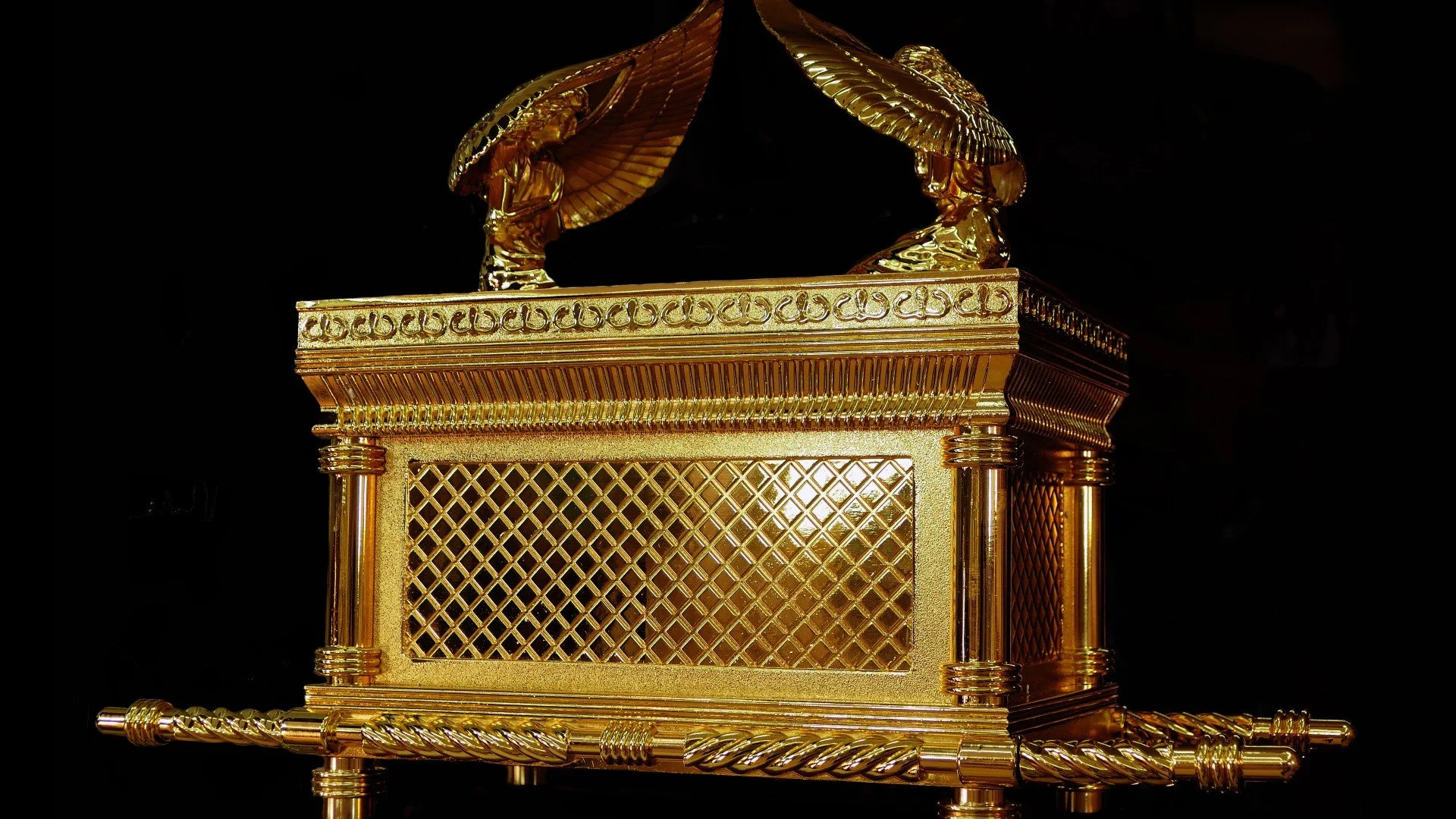
1 Samuel 4.4 | So the people sent men to Shiloh to bring back the ark of the covenant of the Lord of Armies, who is enthroned between the cherubim. Eli’s two sons, Hophni and Phinehas, were there with the ark of the covenant of God. (CSB)
Eli...
Priest at Shiloh and Judge of Israel...
Hophni and Phinehas...
Sons of Eli...
1 Samuel 4.5 | When the ark of the covenant of the Lord entered the camp, all the Israelites raised such a loud shout that the ground shook. (CSB)
Feel the excitement.
The ark enters the camp.
Hophni and Phinehas come with it.
The soldiers begin to shout.
The ground shakes.
The Philistines hear the noise.
1 Samuel 4.6 | The Philistines heard the sound of the war cry and asked, “What’s this loud shout in the Hebrews’ camp?” When the Philistines discovered that the ark of the Lord had entered the camp, (CSB)
1 Samuel 4.7 | they panicked. “A god has entered their camp!” they said. “Woe to us! Nothing like this has happened before. (CSB)
1 Samuel 4.8 | Woe to us! Who will rescue us from these magnificent gods? These are the gods that slaughtered the Egyptians with all kinds of plagues in the wilderness. (CSB)
1 Samuel 4.9 | Show some courage and be men, Philistines! Otherwise, you’ll serve the Hebrews just as they served you. Now be men and fight!” (CSB)
The Philistines are terrified.
They have heard what Israel's God did to Egypt.
They believe the gods have entered Israel's camp.
They tell one another:
"Be strong! Fight like men!"
Israel thinks the ark guarantees victory.
The Philistines think the ark makes Israel almost unbeatable.
Everyone on both sides is focused upon the ark.
But almost no one is focused upon the Lord.
1 Samuel 4.10 | So the Philistines fought, and Israel was defeated, and each man fled to his tent. The slaughter was severe—thirty thousand of the Israelite foot soldiers fell. (CSB)
1 Samuel 4.11 | The ark of God was captured, and Eli’s two sons, Hophni and Phinehas, died. (CSB)
Israel is crushed.
Thirty thousand foot soldiers are killed.
The army flees.
Hophni is dead.
Phinehas is dead.
The ark of God is captured.
Do not read aloud...
1 Samuel 4.12 | That same day, a Benjaminite man ran from the battle and came to Shiloh. His clothes were torn, and there was dirt on his head. (CSB)
1 Samuel 4.13 | When he arrived, there was Eli sitting on his chair beside the road waiting, because he was anxious about the ark of God. When the man entered the city to give a report, the entire city cried out. (CSB)
1 Samuel 4.14 | Eli heard the outcry and asked, “Why this commotion?” The man quickly came and reported to Eli. (CSB)
1 Samuel 4.15 | At that time Eli was ninety-eight years old, and his eyes didn’t move because he couldn’t see. (CSB)
1 Samuel 4.16 | The man said to Eli, “I’m the one who came from the battle. I fled from there today.” “What happened, my son?” Eli asked. (CSB)
1 Samuel 4.17 | The messenger answered, “Israel has fled from the Philistines, and also there was a great slaughter among the people. Your two sons, Hophni and Phinehas, are both dead, and the ark of God has been captured.” (CSB)
1 Samuel 4.18 | When he mentioned the ark of God, Eli fell backward off the chair by the city gate, and since he was old and heavy, his neck broke and he died. Eli had judged Israel forty years. (CSB)
The messenger returns to Shiloh.
Eli hears:
Israel has been defeated.
His sons are dead.
The ark has been captured.
When Eli hears about the ark, he falls backward.
His neck is broken.
He dies.
But there is a postscript to the story.
1 Samuel 4.19 | Eli’s daughter-in-law, the wife of Phinehas, was pregnant and about to give birth. When she heard the news about the capture of God’s ark and the deaths of her father-in-law and her husband, she collapsed and gave birth because her labor pains came on her. (CSB)
1 Samuel 4.20 | As she was dying, the women taking care of her said, “Don’t be afraid. You’ve given birth to a son!” But she did not respond or pay attention. (CSB)
1 Samuel 4.21 | She named the boy Ichabod, saying, “The glory has departed from Israel,” referring to the capture of the ark of God and to the deaths of her father-in-law and her husband. (CSB)
1 Samuel 4.22 | “The glory has departed from Israel,” she said, “because the ark of God has been captured.” (CSB)
Phinehas's wife goes into difficult labor.
She gives birth to a son.
The women around her tell her:
"Do not be afraid. You have given birth to a son!"
But she does not respond to them.
She names the child:
Ichabod.
Why?
"The glory has departed from Israel."
The army was defeated.
Her husband was dead.
Her father-in-law was dead.
The ark had been captured.
The glory was gone.
But here is the truth we must understand:
The glory did not depart when the ark was captured.
The capture of the ark revealed that the glory had already been despised.
The battlefield was not the beginning of Israel's collapse.
It was the public revelation of a collapse that had already occurred...
In the sanctuary.
In the priesthood.
In Eli's home.
In Israel's worship.
And in the hearts of the people.
The glory departs gradually before the collapse comes suddenly.
Why Does the Glory Depart?
I. The Glory Departs When Sin Is Tolerated
The Wicked Sons
To understand 1 Samuel 4, we must go back to 1 Samuel 2.
1 Samuel 2.12 | Eli’s sons were wicked men; they did not respect the Lord (CSB)
Hophni and Phinehas were priests.
They wore the robes.
They performed the rituals.
They worked around the sacrifices.
They occupied positions of spiritual authority.
But they did not know the Lord.
Let me first show you how they ended up in this situation, and then I’ll show you what this means for us.
The Catalyst for the Problem
A. Their appetites had become their authority
According to 1 Samuel 2.13–17, they stole from the sacrifices.
God had established what portion belonged to the priests.
But Hophni and Phinehas were not satisfied with what God had given.
They wanted more.
They wanted it their way.
They wanted it when they wanted it.
Their operating principle was:
"I want it; therefore, I will take it."
That is one of the clearest descriptions of sin.
God says:
"This is the boundary."
Sin says:
"My desire matters more than God's boundary."
God says:
"This is what I have given you."
Sin says:
"What God has given me is not enough."
God says:
"This belongs to someone else."
Sin says:
"But I want it."
That same principle appears in 1 Samuel 2.22.
1 Samuel 2.22 | Now Eli was very old. He heard about everything his sons were doing to all Israel and how they were sleeping with the women who served at the entrance to the tent of meeting. (CSB)
Hophni and Phinehas were engaging in sexual immorality with women who served at the entrance to the tent of meeting.
The sanctuary had become a setting for exploitation.
The priests who should have protected holiness were profaning it.
Their desires had become their authority.
That is the root beneath many of the moral controversies of our generation.
In sexual morality:
"My desires determine what is right."
In gender:
"My internal sense of self determines what my body means."
In abortion:
"My autonomy determines whether the dependent life within me may continue."
In marriage:
"My fulfillment takes priority over covenant faithfulness."
In pornography:
"My gratification takes priority over the dignity of another person."
In adultery:
"My feelings take priority over my promises."
Do not miss this:
The common root is autonomous desire...
The belief that the self possesses the authority to overrule God, creation, covenant, and obligation.
The movement from 1976 to 2026 might be described like this:
In 1976, people increasingly claimed the freedom to act upon their desires.
By 2026, people increasingly claimed the authority to define reality according to their desires.
We have moved from:
"I will do what I want."
To:
"What I want determines what is true."
B. Sin moved from private practice to public normalization
Israel had always had sinners.
The problem was not merely that someone in Israel committed sexual sin.
The crisis was that the sin became:
Known.
Habitual.
Public.
Protected.
And institutionalized.
These men continued serving as priests!
Here is the progression we often see:
Sin is practiced secretly.
Sin becomes publicly known.
Sin is tolerated.
Sin is normalized.
Sin is defended.
Sin is celebrated.
Sin is incorporated into the institutions that should restrain it.
Opposition to the sin is treated as the greater sin.
Hophni and Phinehas reached the point where the people's worship had to accommodate their appetites.
And 1 Samuel 2.17 says:
1 Samuel 2.17 | So the servants’ sin was very severe in the presence of the Lord, because the men treated the Lord’s offering with contempt. (CSB)
Their sin did not remain private.
It changed how other people viewed worship.
Their behavior caused people to despise the offering of the Lord.
Sexual corruption eventually produces spiritual corruption.
Once human desire becomes sovereign, God must be redefined.
A holy God becomes intolerable because a holy God has the right to tell us:
"No."
So the culture begins constructing a god who never contradicts us.
A god who affirms our desires.
A god who blesses our decisions.
A god who approves whatever the culture has most recently approved.
But a god who never contradicts you is not the God of the Bible.
He is simply a projection of yourself.
C. Eli knew but did not restrain
Read 1 Samuel 3.13...
1 Samuel 3.13 | I told him that I am going to judge his family forever because of the iniquity he knows about: his sons are cursing God, and he has not stopped them. (CSB)
Eli knew.
He was not ignorant.
He had heard what his sons were doing.
He verbally objected.
Read 1 Samuel 2.23–24...
1 Samuel 2.23 | He said to them, “Why are you doing these things? I have heard about your evil actions from all these people. (CSB)
1 Samuel 2.24 | No, my sons, the news I hear the Lord’s people spreading is not good. (CSB)
Eli said:
"Boys, this is not good."
But they remained priests.
They retained their positions.
They continued handling the sacrifices.
They continued dishonoring God.
Eli's words sounded like opposition.
Eli's actions amounted to permission.
God says in 1 Samuel 2.29...
1 Samuel 2.29 | Why, then, do all of you despise my sacrifices and offerings that I require at the place of worship? YOU HAVE HONORED YOUR SONS MORE THAN ME, by making yourselves fat with the best part of all of the offerings of my people Israel.’ (CSB)
That is the issue!
Eli did not necessarily believe that their conduct was right.
But he valued his sons more than he valued God's holiness.
He valued family tranquility more than faithfulness.
He valued avoiding confrontation more than protecting the people.
He wanted to preserve the relationship even if preserving it dishonored God.
A leader can personally disapprove of sin while functionally enabling it.
The glory departs when sin is tolerated.
When does the glory depart?
When a country tolerates sin, the glory departs
Again, every country contains sinners.
The question is not whether sin exists.
The question is:
What does the country honor?
What does it protect?
What does it teach?
What does it celebrate?
What does it excuse?
What does it require people to affirm?
The greatest moral change between 1976 and 2026 is not that people suddenly began sinning.
People were sinning in 1976!
The change is that many sins moved:
From the margins to the center.
From being shameful to being celebrated.
From being legally permitted to being institutionally affirmed.
From asking for tolerance to demanding participation.
Just look around...
Abortion was widely recognized as a moral evil in 1976...
Today it is praised as a courageous exercise of personal autonomy.
Homosexual behavior was broadly understood as sinful in 1976.
Today it is celebrated as an authentic expression of love.
Gender denial was unthinkable in 1976...
Today it is often applauded as bravely embracing one’s true identity.
What was once condemned is now celebrated.
What was once called sin is now called courage.
What was once called rebellion is now called authenticity.
What was once called confusion is now called identity.
Listen carefully:
We must remember...
People struggling with sexual temptation are not our enemies.
People experiencing gender confusion are not objects of mockery.
Women who have had abortions are not beyond the grace of God.
Men who pressured women toward abortion are not beyond forgiveness.
The church must tell the truth with tears rather than contempt.
Every person is made in the image of God.
Every person should be treated with dignity.
Every person needs the saving grace of Jesus Christ.
But compassion cannot require us to call falsehood true.
Love cannot require us to call destruction freedom.
Grace cannot require us to redefine sin.
We are not doing people a favor when we refuse to call sin "sin."
We are hiding from them the very reason the gospel is good news.
When a church tolerates sin, the glory departs
It would be easy to preach this sermon entirely about America.
It would be easy to talk about:
Hollywood.
Washington.
Universities.
Corporations.
Activists.
The media.
But where was the corruption in 1 Samuel?
It was at Shiloh.
It was in the sanctuary.
It was in the priesthood.
The darkest sin in the story was not occurring in a Philistine temple.
It was occurring around the altar of God.
Before the church condemns the sexual confusion of the culture, the church must confront:
Pornography among its own members.
Adultery in its own marriages.
Sexual abuse covered up by its own leaders.
Gossip.
Greed.
Racism.
Pride.
Hypocrisy.
The abandonment of biblical authority.
We can possess the right statement on marriage and still lose the glory of God.
We can pass resolutions and still lose the glory of God.
We can win political arguments and still lose the glory of God.
We can condemn sins outside the church while protecting sins inside the church.
Hophni and Phinehas probably preached the right theology of the sacrifices.
They simply refused to submit their appetites to it.
Orthodox words cannot compensate for unholy lives.
When a Christian tolerates sin, the glory departs
Let us make this personal.
What sin have you learned to tolerate?
What once bothered you but no longer bothers you?
What have you excused by saying:
"That is just the way I am."
"Everyone struggles with something."
"It is not hurting anyone."
"God understands."
"At least I am not as bad as someone else."
Perhaps there was a time when you were closer to God than you are now.
You once prayed.
You once read the Word.
You once felt conviction.
You once worshiped with tenderness.
You once wanted God's will more than your own.
What happened?
Usually, no one decides in a single moment:
"I am going to become cold toward God."
We tolerate something.
Then we accommodate it.
Then we protect it.
Then we no longer notice it.
The glory departs gradually before the collapse comes suddenly.
II. The Glory Departs When Trust is Misplaced.
What did they depend upon?
Return to 1 Samuel 4.3...
1 Samuel 4.3 | When the troops returned to the camp, the elders of Israel asked, “Why did the Lord defeat us today before the Philistines? Let’s bring the ark of the Lord’s covenant from Shiloh. Then it will go with us and save us from our enemies.” (CSB)
Notice their language:
"It will save us."
Not:
"The Lord will save us."
The ark represented:
God's covenant.
God's holiness.
God's throne.
God's presence among his people.
But Israel separated the symbol from the reality.
They believed:
If we possess the ark, we possess God.
If we carry the ark, God must accompany us.
If God accompanies us, God must give us victory.
They did not want to surrender to God.
They wanted to control God.
They did not bring the ark because they wanted God to be glorified.
They brought the ark because they wanted to defeat the Philistines.
God was not their end.
God was their means.
God had become:
Their lucky charm.
Their rabbit's foot.
Their secret weapon.
Their guarantee of success.
They wanted God's power without God's holiness.
They wanted God's protection without God's commands.
They wanted God's presence without repentance.
They wanted the ark.
They did not want the Lord of the ark.
When does the glory depart?
A. When a Country puts assurance in things other than God the Glory departs!
The problem...
If we put our confidence and our assurance in...
Our military...
Our wealth...
Some leader...
Our history and heritage...
Our institutions...
Then we, like the Israelites, have put our assurance in the wrong thing.
When you see people look at our national problems and say...
We need...
We need a better president.
We need a better Congress.
We need better judges.
We need a stronger economy.
We need better schools.
We need a more powerful military.
Well, some of those things might be helpful...
But none substitute for what our nation needs...
We need...
Repentance...
Revival...
Because we need the LORD!
B. When a Church puts assurance in things other than God the Glory departs!
We cannot and must not put our assurance in...
In our history...
In our property or resources...
In a leader, a preacher, or a singer...
In our reputation...
The word of God says...
Zechariah 4.6 | So he answered me, “This is the word of the Lord to Zerubbabel: ‘Not by strength or by might, but by my Spirit,’ says the Lord of Armies. (CSB)
As a church, we must be desperate to come before the Lord...
And seek to follow him...
And seek to honor him...
And ask for his guidance, provision, and blessing...
C. When a Christian puts assurance in things other than God the Glory departs!
Arks: Membership, Church Attendance, QT, Tithing...
We should live daily in absolute dependence on God.
Could you get by this next week without God?
Many of you did last week!
Conclusion
To wrap this up, let us focus on two key words...
Ichabod...
Ebenezer...
Ichabod declares hope is lost.
Phinehas’s wife went into a difficult labor...
She gave birth to a son...
But the complications of childbirth were fatal.
And as she lay dying...
She named the boy Ichabod...
And with her final words, she explained why:
The glory has departed...
1 Samuel 4.21 | She named the boy Ichabod, saying, “The glory has departed from Israel,” referring to the capture of the ark of God and to the deaths of her father-in-law and her husband. (CSB)
1 Samuel 4.22 | “The glory has departed from Israel,” she said, “because the ark of God has been captured.” (CSB)
Mrs. Phinehas believed the glory had departed because the ark was captured.
But the glory had been departing for a long time...
The word ICHABOD simply recognized and named the situation...
Ichabod can be written over...
A country...
Regardless of its wealth, military strength, technology, or heritage...
A country can lose the glory...
A nation may possess abundant resources and formidable power...
Yet trust in everything except God.
Listen to how God says this through the prophet, Isaiah...
Isaiah 31.1 | Woe to those who go down to Egypt for help and who depend on horses! They trust in the abundance of chariots and in the large number of horsemen. They do not look to the Holy One of Israel, and they do not seek the Lord. (CSB)
A church...
Regardless of its buildings, bank accounts, reputation, or heritage...
A church can lose the glory...
Every county in Texas is riddled with glory-less churches...
Churches that once thrived...
Churches that once stood as monuments for the glory of God...
Churches where God's word was heralded and proclaimed...
But now characterized by...
Compromise...
Conflict...
Decline...
A Christian...
Regardless of his or her membership, reputation, history or heritage...
A Christian can lose the glory...
A genuine Christian cannot lose his salvation, but he can lose the glory...
Revelation 2.4 | But I have this against you: You have abandoned the love you had at first. (CSB)
For how many of us has the story of our devotion, fervor, love, and zeal for God been a story of long ago?
Ichabod declares hope is lost!
But Ichabod does not have to be the final word.
Ebenezer celebrates hope renewed.
If we fast forward about 20 years (1 Samuel 7.2) from 1 Samuel 4, we come to 1 Samuel 7...
We see in 1 Samuel 7 that things have changed.
Here is what Samuel said...
1 Samuel 7.3 | Samuel told them, “If you are returning to the Lord with all your heart, get rid of the foreign gods and the Ashtoreths that are among you, set your hearts on the Lord, and worship only him. Then he will rescue you from the Philistines.” (CSB)
If you read the next few verses, you will see...
They repented in 1 Samuel 7.4.
They confessed their sin in 1 Samuel 7.6.
They worshiped the Lord in 1 Samuel 7.9...
1 Samuel 7.9 | Then Samuel took a young lamb and offered it as a whole burnt offering to the Lord. He cried out to the Lord on behalf of Israel, and the Lord answered him. (CSB)
This points to JESUS!
They fought for the Lord in 1 Samuel 7.11.
Then in 1 Samuel 7.12, Samuel said this...
1 Samuel 7.12 | Afterward, Samuel took a stone and set it upright between Mizpah and Shen. He named it Ebenezer, explaining, “The Lord has helped us to this point.” (CSB)
Ichabod meant the glory had departed...
But Ichabod does not have to be the last word.
It does not have to be the last word for...
Our nation...
Our church...
You...
Ebenezer tells us the glory can return.
How?
Confession and repentance...
Worship that honors God by trusting him...
Life of fighting for and obeying the Lord...