
Sermon: Hope Rekindled on the Emmaus Road – Lk 24.13–35 (4/5/26)
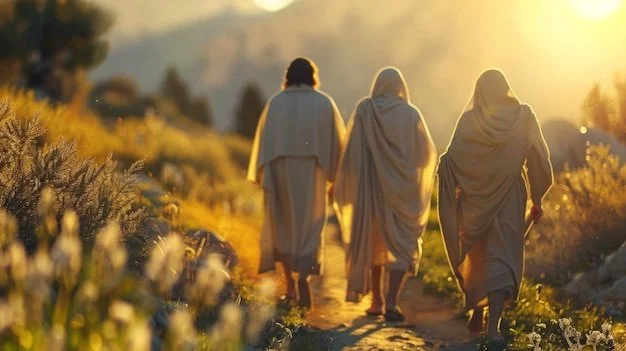
Introduction
Scripture
If you have your Bible with you this morning, turn to Luke 24.
Prop
I brought a giant street sign with me this morning...
If you cannot read the sign from where you are sitting, it says:
EMMAUS ROAD...
In the time of Jesus, this was an actual road…
It connected Jerusalem to a small village called Emmaus…
Emmaus was north and west of Jerusalem...
Imagine a road from here to Martinsville...
But this morning…
I want you to see it as more than a road on a map…
I want you to see it as a place people still walk today…
And some of you are on that road right now.
Have you ever been driving somewhere and you take a wrong turn and your GPS says, ‘Recalculating…’?
That is the Emmaus Road...
The Emmaus Road
It is the road you find yourself on when life does not turn out the way you thought it would…
It is where you go when what you hoped for does not happen…
It is the road of confusion…
It is the road of disappointment…
It is the road of regret…
It is the road of frustration…
You are on the Emmaus Road if you are frustrated that life has not turned out the way you hoped...
You are on the Emmaus Road if you are disappointed with the Lord...
You are on the Emmaus Road if you know what the Bible says about the crucifixion and the resurrection but do not understand how that really matters...
But, I have good news about the Emmaus Road...
You are not on that road alone...
Jesus joins you on the Emmaus Road...
Jesus walks with you on the Emmaus Road...
With the right steps today, that road can take you to a place of hope and peace and joy.
And what we are about to see is what happens on that road…
So I want you to listen closely…
Because this story is not just about them…
It is about you…
Some of you walked in here this morning…
And you didn’t realize it…
But you are on this road...
The title of this message is 'Hope Rekindled on the Emmaus Road.'
Let me show you what I mean as we look at Luke 24 together...
Scripture
Setting
We are about to read the story of two people traveling from Jerusalem to the small village of Emmaus.
This one-day journey begins Sunday morning.
The timing is important...
This is the Sunday morning after the Friday crucifixion...
This is the Sunday morning of the resurrection...
Though that piece of information was either unknown, unbelieved, or misunderstood by these travelers.
Interestingly, this one-day journey both begins and ends in Jerusalem...
When these two people complete their journey, they will have experienced a complete metamorphosis.
Luke 24.13 | Now that same day two of them were on their way to a village called Emmaus, which was about seven miles from Jerusalem. (CSB)
Emmaus was about seven miles from Jerusalem.
We will learn a few verses into this story that one of the two travelers was a man by the name of Cleopas.
We do not know with any certainty who the other traveler was.
Often people just assume it was another man, but there is nothing in the text to suggest this.
Some have suggested (and I like to believe) that the other traveler was Cleopas's wife, Mary (mentioned in John 19.25).
We do know there were three Marys at the crucifixion...
John 19.25 | Standing by the cross of Jesus were his mother, his mother’s sister, Mary the wife of Clopas, and Mary Magdalene. (CSB)
Mary, the mother of Jesus...
Mary Magdalene, the first person to see the risen Christ...
Mary, the wife of Cleophas...
`Slightly different spelling (Κλωπας vs. Κλεοπας) but essentially same pronunciation...
Luke 24.14 | Together they were discussing everything that had taken place. (CSB)
When Luke says they were discussing everything that had taken place…
That includes the entire week…
The triumphal entry…
`Crowds shouting… palm branches waving…
`It felt like everything was finally coming together…
Jesus teaching in Jerusalem…
`With Authority…
`Power…
`Clarity…
Then suddenly, everything turns…
Jesus was arrested…
He was tried…
He was beaten…
He was crucified…
The week started with a CELEBRATION…
And it ended with a CROSS…
And now they are walking away…
Trying to process…
Trying to understand…
And here is the key…
They are leaving Jerusalem…
Because, as far as they can tell…
THE STORY IS OVER.
They had given their hopes to Jesus…
And now those hopes seemed to be BURIED WITH HIM.
Luke 24.15 | And while they were discussing and arguing, Jesus himself came near and began to walk along with them. (CSB)
Luke 24.16 | But they were prevented from recognizing him. (CSB)
We will delve more deeply into this shortly, but this is the hidden turning point.
They did not know it was him, but Jesus joins them just as they are at their lowest point.
Keep this phrase in mind...
They were prevented from recognizing him...
Everything in this story turns on the moment that changes.
Luke 24.17 | Then he asked them, “What is this dispute that you’re having with each other as you are walking?” And they stopped walking and looked discouraged. (CSB)
There are some key words (phrases) in this verse...
Dispute
Looked Discouraged
Stopped Walking
Dispute
This is a strong word.
The literal sense of the original word is that they were throwing their words back and forth.
They are not just confused…
They are frustrated with each other.
The confusion was immense.
Confusion that led to frustration...
Confusion that led to disappointment...
Confusion that led to an emotional response...
Looked discouraged
This verse describes their emotional response with the word, DISCOURAGED.
It refers to a dark sadness...
Gloom...
HOPELESSNESS...
They LOOKED discouraged...
You could see it on their faces...
You could see it in their countenance...
Stopped walking
The Bible does not include meaningless words.
They WERE STOPPED by their confusion, frustration, disappointment, and loss of hope.
It stopped them in their tracks.
Have you ever experienced that?
I certainly have...
It is hard...
Luke 24.18 | The one named Cleopas answered him, “Are you the only visitor in Jerusalem who doesn’t know the things that happened there in these days?” (CSB)
There is a bit of irony here…
Cleopas looks at Jesus…
And says, “Are you the only one who doesn’t know what just happened?”
And the irony is…
He is talking to the only person who fully understands what just happened.
Cleopas is explaining the cross...
To the one who died on it!
Luke 24.19–24, 25
Summarize...
In the next half-dozen verses, Cleopas explains what happened to Jesus who patiently listens to the story.
Cleopas sort-of gets the facts right...
But he gets the meaning wrong...
Cleopas mentions the crucifixion and that there were some rumors that Jesus was alive again...
But it is clear that Cleopas either did not believe or did not understand the resurrection.
In the next verses, Jesus will respond...
Luke 24.26 | Wasn’t it necessary for the Messiah to suffer these things and enter into his glory?” (CSB)
The crucifixion was not an accident or a failure but part of the long and necessary plan.
Luke 24.27 | Then beginning with Moses and all the Prophets, he interpreted for them the things concerning himself in all the Scriptures. (CSB)
Jesus does not do what you would expect...
He does not immediately reveal himself and show them the nail scars in his hands and feet...
He does not show them the scar the spear made in his side...
Jesus begins with the biblical account of Moses in the book of Genesis and walks through the story arc of the Old Testament...
This likely took several hours as the three continued on their journey.
What specifically did Jesus show these travelers?
Jesus begins with Moses and all the Prophets and shows them how the Scriptures point to him.
Luke 24.28–30
(Do not read or explain these verses.)
Luke 24.31 | Then their eyes were opened, and they recognized him, but he disappeared from their sight.(CSB)
At this point everything changed...
They understood the critical importance of the resurrection!
They fully believed and embraced the resurrection!
Remember I told you when we read verse 16 that when what was hidden became known, everything would change!
Now it has changed!
Luke 24.32 | They said to each other, “Weren’t our hearts burning within us while he was talking with us on the road and explaining the Scriptures to us?” (CSB)
They realized their hearts had been burning the whole time.
What does that mean?
Jesus had been at work in them long before they recognized him.
God was with them in their discouragement and hopelessness.
Luke 24.33 | That very hour they got up and returned to Jerusalem. They found the Eleven and those with them gathered together. (CSB)
Life changed!
That very hour!
Contrast this with verse 17 when their discouragement stopped them in their tracks...
Luke 24.17 | Then he asked them, “What is this dispute that you’re having with each other as you are walking?” And they stopped walking and looked discouraged. (CSB)
They got up...
The original verb, ἀνίστημι, was also used by Luke to describe the resurrection!
Luke 24.7 | saying, ‘It is necessary that the Son of Man be betrayed into the hands of sinful men, be crucified, and rise (ἀνίστημι) on the third day’ (CSB)
The rising up of Christ spurred the rising up of these two travelers!
Because of the resurrection of Christ, these two experienced their own resurrection-adjacent event!
Road Conditions on the Way to Emmaus
Let us look at four road conditions for those on the Emmaus Road...
I. The Road Is Littered With Broken Expectations.
Most Important Verse
We actually skipped the most important verse in this passage earlier because I wanted to focus on it here...
Luke 24.21 | But we were hoping that he was the one who was about to redeem Israel. Besides all this, it’s the third day since these things happened. (CSB)
That may be one of the saddest sentences in the Bible:
But we were hoping…
Cleopas and his friend or wife had imagined this future...
They believed Jesus would rise to power…
Deliver Israel…
And make everything right.
They expected him to overthrow Rome and restore Israel to greatness.
He would lead the nation of Israel to prominence...
He would throw off the oppression...
He would relieve suffering...
He would bolster the economy...
He would make the nation strong and secure...
He would defeat all of their enemies...
But things did not turn out like they hoped...
Jesus arrested, tried, beaten, crucified, buried...
Now they are disappointed, sad, frustrated, hopeless, numb...
In fact, when Luke 24.21 says, "We were hoping that he was the one..."
The grammar in the original (imperfect active indicative) tells us that they once hoped but they did not hope any longer.
Some of you may know exactly what that feels like…
“I had hoped my life would turn out differently...”
"But I do not hope any longer..."
“I had hoped faith would make more sense.”
"But I do not hope any longer..."
“I had hoped my marriage would work.”
"But I do not hope any longer..."
“I had hoped God would heal my child, husband, friend..."
"But I do not hope any longer..."
Given up...
These two travelers had given up.
They were walking away from the very place where God was at work...
All because they thought the story was over.
Some of you are on that same road this morning.
The road is littered with broken expectations.
II. There Is a Stranger on the Road Who Is Not a Stranger.
Let us read verse 15 again...
Luke 24.15 | And while they were discussing and arguing, Jesus himself came near and began to walk along with them. (CSB)
What is going on?
They are...
They are walking away.
They are confused.
They are discouraged.
Then...
Jesus came near...
The travelers did not find Jesus.
JESUS FOUND THEM!
The gospel movement in this story is not upward.
It is downward.
It is not that they made their way back to him.
It is that he came after them.
Today...
He is NOT waiting for you to return.
HE IS PURSUING YOU.
He is not standing at the finish line saying,
“Clean yourself up and come back to me.”
He comes out onto the road...
He meets people while they are walking away.
You...
You may have come to this service for one of a hundred reasons…
Curiosity
Tradition
Invitation
Obligation
But Jesus meets you here for exactly one reason...
He desires to come near to you and RESTORE YOUR HOPE.
The patient care of Christ...
Jesus walked seven miles with these two travelers.
He did not rush them.
He did not interrupt them.
He listened to their story because he cared for them.
And here is the amazing part...
He even lets them tell the story wrong.
They were wrong about who Jesus was...
They were wrong about what Jesus's mission was...
They were wrong about what the cross meant...
They were wrong about the Scriptural role of suffering...
They were wrong in their hesitation about the resurrection...
He listens to their confusion before he corrects it.
It is like a parent walking with a hurting child...
They do not interrupt.
They do not correct right away.
They just walk and listen.
That is what Jesus is doing here.
The love of Christ...
The same love that carried Jesus to the cross is the very same love that carried him down that road.
The same Savior who walked to Calvary now walks beside discouraged people.
Jesus meets people walking away...
I read one Bible teacher this week who said...
Grace is not passive here.
Grace walks seven miles.
What is next?
Now watch what Jesus does next.
He does not give them a sign.
He does not give them a feeling.
He gives them Scripture.
There Is a Stranger on the Road Who Is Not a Stranger.
III. The Road Is Illuminated by the Word of God.
The word of God is what turns a road of CONFUSION into a road of CLARITY.
What did Jesus say when he began to speak to the travelers?
Luke 24.27 | Then beginning with Moses and all the Prophets, he interpreted for them the things concerning himself in all the Scriptures. (CSB)
We learn a couple very important lessons from Jesus's approach...
A. Scripture is sufficient to provide the answers for life's most important questions.
Error...
For these two travelers, their biggest error was not that they did not believe the initial reports of the resurrection...
Their biggest error is that they did not understand the Scripture they had been given (what we call the Old Testament).
That is almost always the case when we fumble the ball in life...
The issue is rarely that we need more information…
The issue is that we do not understand the Scripture we already have.
This is why First Baptist Church focuses so much on just teaching the Bible!
B. Scripture Teaches us how to be right with God.
When the travelers were confused, Jesus opened the Bible...
These travelers would have known the Old Testament (what we now call the Old Testament).
So, Jesus took their Scriptures and explained the good news to them...
Have you ever watched a movie where you did not understand what was going on…
And then at the end… something is revealed…
And suddenly you realize…
Oh… that scene meant something different…
That moment was not random…
The whole story changes…
Not because new scenes were added…
But because you finally understood it.”
That is what Jesus is doing…
He is not giving them new events…
He is giving them a new understanding.
Can you imagine that Bible study?
Seven miles...
Walking down that road...
And Jesus starts opening the Scriptures...
Maybe Jesus quoted Isaiah 53.6...
Isaiah 53.6 | We all went astray like sheep; we all have turned to our own way; and the Lord has punished him for the iniquity of us all. (CSB)
We all went astray...
All have sinned, failed, and rebelled...
Like sheep...
Like sheep, we are prone to wander...
We all have turned to our own way...
We are selfish and self-centered...
The Lord has punished him for the iniquity of us all...
What is this and why is it needed?
Then maybe Jesus quoted Isaiah 53.5...
Isaiah 53.5 | But he was pierced because of our rebellion, crushed because of our iniquities; punishment for our peace was on him, and we are healed by his wounds. (CSB)
Pierced...
Crucifixion...
Crushed...
This refers to crushing in both a physical and spiritual sense...
Not only was he tortured and crucified...
He also carried the weight of the guilt of all of our sin...
Because...
Notice this word appears twice...
Why was Jesus pierced and crushed?
Because of our rebellion and iniquities...
We are healed by his wounds...
Salvation...
Forgiveness...
Eternal security...
Here is how it would later be written in the New Testament...
2 Corinthians 5.21 | He made the one who did not know sin to be sin for us, so that in him we might become the righteousness of God. (CSB)
The one who did not know sin...
Jesus
He made the one... to be sin for us...
This describes what happened on the cross...
So that in him we might become the righteousness of God...
A substitution...
An exchange...
Guilt for righteousness (right standing with God)...
<<<<<<<<<< CALL FOR TEXT RESPONSE >>>>>>>>>>
Slide:
I trust Christ as my substitute and my Lord!
Text your first name to 936-279-3909.
Today we call all of this the GOSPEL, the good news.
Jesus helps these travelers understand that...
The crucifixion was not a failure...
The cross was not a tragedy, it was a transaction.
The cross was not a mistake, but a mission.
The cross was not defeat, but victory.
The Road Is Illuminated by the Word of God.
IV. The Resurrection Reverses the Road.
The travelers now understood the cross.
Because Jesus had explained Isaiah 53 and other key passages...
But understanding the cross is not the same as recognizing the risen Christ.
Something more had to happen.
Many of you know the gospel I just shared, but your hope has not been rekindled...
Let's see what this is...
For the travelers, hope had failed... Hope had died...
In their minds...
Things did not turn out like they had wanted...
Jesus could not be trusted...
God seemed absent and silent...
The future was uncertain...
In Luke 24.21, they said: "We had hope, but we lost it."
That is the language of people...
Who know the facts of Friday...
But do not yet understand the meaning of Sunday.
We lose hope for the same reasons...
When disappointment and regret combine with the feeling that God is distant and silent...
And with great uncertainty about the future...
We lose hope as well.
But for these travelers, everything changed...
Luke 24.33 | That very hour they got up and returned to Jerusalem. They found the Eleven and those with them gathered together, (CSB)
They had walked seven miles in grief...
Now they ran seven miles back in joy.
Their hope was rekindled!
What rekindled their hope?
What did not change...
Their circumstances...
Their road...
Their past...
What did change?
Their understanding of the RESURRECTION changed!
Imagine being told that someone you loved had died…
You grieve…
You process…
You start to move on…
And then someone comes to you and says…
He/She is alive!
That does not just add information…
That changes everything you thought was final.
If the resurrection is true, then the story is not over!
When the adversary says...
Nothing will ever change...
Things are too far gone...
Pain is the final word...
The resurrection says there is another chapter.
If the resurrection is true, then Jesus can be trusted!
The cross was not proof he failed...
The cross was proof that he fulfilled the plan...
If the resurrection is true, then God is working even when we cannot see it!
The moment that looked like silence...
Was actually God doing his greatest work!
If the resurrection is true, then God has a future in store for his children!
Hope is no longer past tense...
There is still something ahead!
Adrian Rogers Quote:
If Jesus Christ is still in the grave, then nothing really matters.
But if he came out of the grave, then nothing but that really matters.
The Details and Order are key...
Notice the details and the order of events...
Jesus was resurrected in the morning...
The travelers were still without hope...
Why?
Not because Jesus was not risen...
It is like having a message on your phone that changes everything…
But you have not opened it yet.
The truth is there…
But until you read it… it does not change anything for you.
But because they had not believed, embraced, and trusted in the resurrected Christ.
Then the travelers personally recognized the risen Christ.
Then hope was rekindled...
The same thing is true today...
The resurrection does not change your life until you personally recognize the risen Christ.
The resurrection is like a check that has been written but never deposited.
The money is real.
The account is funded.
The signature is valid.
But it does nothing sitting in your wallet, purse, or drawer.
The resurrection is historically true whether anyone believes it or not...
But it only changes your life when you personally receive it.
How does the resurrection resurrect hope?
For the disillusioned:
Jesus does not wait for you to come back.
He walks out to meet you on the road away from faith.
He is already beside you.
For the confused:
Your problem may not be that you need more evidence.
It may be that you need to understand the Scripture you already have.
The cross was not failure, it was the plan.
For the numb:
The burning heart comes before the open eyes.
Understanding Scripture is the first step; recognition of Christ follows.
Stay in the word even when you feel nothing.
For the unchurched guest:
The empty tomb finds you before you find it.
You may have come to this service out of obligation or habit...
But the risen Christ pursues people who are walking away.
The Resurrection Reverses the Road.
Conclusion
Let me close with just one more thing...
Did you catch what the travelers said about the THIRD DAY?
Luke 24.21 | But we were hoping that he was the one who was about to redeem Israel. Besides all this, it’s the third day since these things happened. (CSB)
They said this as their exasperation for how long they had been in this time of cratered hope.
In other words...
"It has been three days..."
"Nothing has changed..."
"It must be over..."
They thought the third day meant it was over but in God’s plan, the third day meant it was just beginning.
Can you personally identify with their exasperation?
Maybe for you the hopelessness has been for much longer than three days...
Maybe it has been...
Three months...
Three years...
Three decades...
I'm sorry...
But I have some good news...
The third day in the Bible...
What these travelers did not know is that the third day is when the Lord does some of his greatest work.
In Scripture, the third day is when God turns what looks finished into something new.
The third day is when...
God provided Abraham a substitute to spare Isaac (Genesis 22.4)...
God delivered Jonah (Jonah 1.17)...
God restored Israel (Hosea 6.2)...
Christ is risen!
What does that mean for us stuck on the Emmaus Road?
It means...
What feels final may not be final...
What looks dead may not be dead...
What seems silent may not be silent...
The resurrection does not just prove something happened then…
It means something can happen NOW.
God will come to you on time...
He is still working.
If you recognize the risen Christ, today may be your "THIRD DAY..."
<<<<<<<<<< CALL FOR TEXT RESPONSE >>>>>>>>>>
Response Options...
Text:
936-279-3909
I encourage everyone to send me a text of some kind...
Decision ###4:
I want to share a prayer request with you.
Decision ###3:
I want to get better connected with the church.
Decision ###2:
I want to take the next steps to strengthen my faith.
Decision ###1:
I choose to follow Christ for the first time.
PRAYER