
Sermon: Christmas At First – God Is Always On Time – Gal 4.4 (12/14/25)
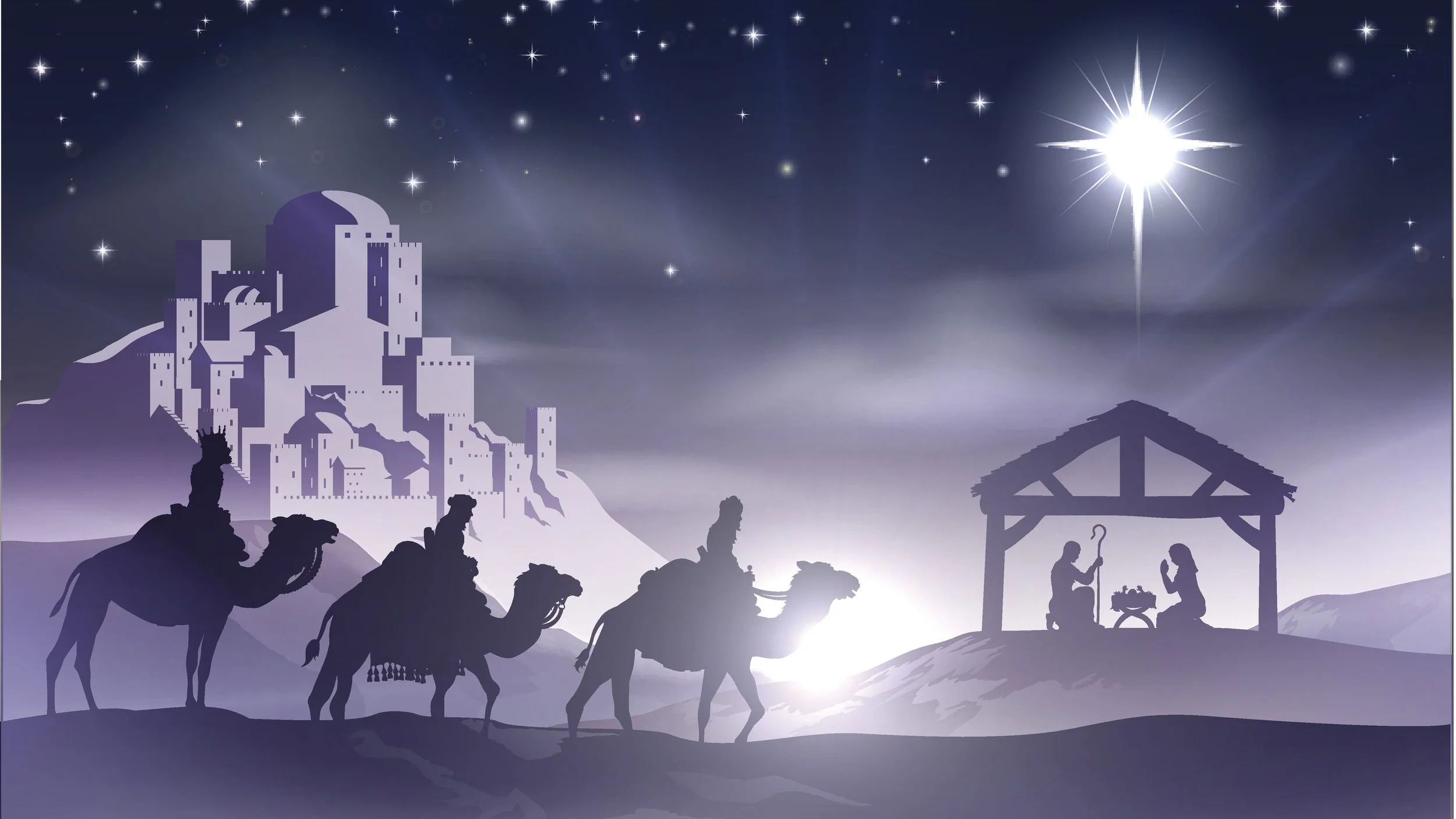
Introduction
Turn in your Bibles to Galatians 4.
There we find a classic Christmas verse.
At the end of Galatians 3 and the beginning of Galatians 4, the Apostle Paul, the human author of this letter, explains how we are adopted as God's children and how we become his heirs in Christ and coheirs with Christ.
Right in the middle of that section, we find a BRILLIANT and IMPORTANT verse, Galatians 4.4.
It is a verse that frames the meaning of the Christmas season...
It is a verse that unveils the wisdom and timing of God's plan to rescue mankind...
It is a verse that pulls back the curtain on the mystery of the TRINITY...
And it is a verse that anchors us with STURDY HOPE for uncertain times...
Over the next two weeks, we are going to slow down, linger here, and draw out every ounce of comfort and wonder this classic CHRISTMAS verse offers.
Scripture
Galatians 4.4 | When the time came to completion, God sent his Son, born of a woman, born under the law,(CSB)
Early Hymn
Many scholars believe this verse echos a line in an early Christmas hymn or maybe part of a creed or confession of faith the early Christians would recite in worship.
There are roughly fourteen of these passages embedded in the New Testament.
Eleven of these appear in Paul's letters.
(Also in John, Hebrews, 1 Peter.)
This one is brief.
Some are much longer.
The most celebrated example is Philippians 2.6–11.
This was a part of hymn that celebrated the incarnation and the crucifixion.
Philippians 2.6 | who, existing in the form of God, did not consider equality with God as something to be exploited. (CSB)
Philippians 2.7 | Instead he emptied himself by assuming the form of a servant, taking on the likeness of humanity. And when he had come as a man, (CSB)
Philippians 2.8 | he humbled himself by becoming obedient to the point of death— even to death on a cross. (CSB)
Philippians 2.9 | For this reason God highly exalted him and gave him the name that is above every name, (CSB)
Philippians 2.10 | so that at the name of Jesus every knee will bow— in heaven and on earth and under the earth— (CSB)
Philippians 2.11 | and every tongue will confess that Jesus Christ is Lord, to the glory of God the Father. (CSB)
My favorite is 1 Timothy 3.16...
the mystery of godliness is great:
He was manifested in the flesh,
He was vindicated in the Spirit,
He was seen by angels,
He was preached among the nations,
He was believed on in the world,
He was taken up in glory.
The Time Came to Completion
This tells us that a few things...
A. God has a calendar.
God has a time table.
God has a plan.
B. God is sovereign.
He is in control of earthly events.
He is in control of the flow of history and the rise and fall of nations.
C. Past events have a purpose.
The word "completion" tells us that all of the events prior to what he is talking about in Galatians 4.4 had a purpose.
And when that purpose was COMPLETED, then God did this next thing.
LESSON: ALL OF OUR PAST HAS A PURPOSE.
More on this later.
God Sent His Son
Notice Paul does NOT say...
God made his son...
God created his son...
The Son was already present with the Father.
This teaches us that like the Father, the Son is PREEXISTENT.
He is eternal...
He is uncreated...
He is divine...
We also see this in John 1...
All of this points to the divine nature of Christ.
Born
More on this next week...
But Jesus was not only preexistent, eternal, and divine...
Jesus was also born in the flesh.
The humanity of Jesus is real.
Jesus is...
100% God...
100% man...
Of a Woman
Why does it say that Jesus was "born of a woman" and not mention that he was born as the son of a man?
Why is there a nod to Mary and not also to Joseph?
This points to the virgin birth of Christ.
Jesus was Mary's son but not Joseph's son.
There are clearer passages that teach the virgin birth of Christ, but we at least see a shadow of that important doctrine here.
Born Under the Law
Jesus did not come into the world as one above the law.
Jesus did not enter the world as one exempt from the law.
You might think of an ancient king as someone for whom the law did not apply.
Jesus submitted to the law, the rules, the obligations...
Sometimes we jump too quickly from the incarnation to the crucifixion.
Yes, Jesus was born to die (die for our sins)...
But Jesus was also born to LIVE.
He entered our world...
He entered our world with ALL of the burdens and hardships we face...
He entered our world with ALL of the law, rules, and obligations we face...
And he fulfilled every one of them...
GOSPEL
Draw a circle representing our lives...
Fill the circle with "sin."
Christ's death erases our sin...
But now the circle is empty...
An empty circle is not righteousness.
Christ's obedience fills the circle with his righteousness...
We need BOTH his death and his life.
Born under the law...
The Scene for the Incarnation...
Let's circle back around to the beginning of Galatians 4.4.
When the time came to completion...
It had been over 400 years since the people had heard from a prophet of God.
We call these the 400 years of silence.
Four hundred years is a long time!
The United States is less than 250 years old!
Our Old Testaments end with the prophecy of Malachi.
There is a 400+ year gap between his prophecy and the birth of Christ.
The Jewish people desperately longed for a word from the Lord.
In one of the Jewish writings from that time period (1 Maccabees), the people are said to be in “great distress in Israel… since the time that prophets ceased to appear among them" (1 Maccabees 9.27).
1 Maccabees 9.27 | So there was great distress in Israel, such as had not been since the time that prophets ceased to appear among them. (NRSV)
Some of the Jewish people wondered...
Is God through with us?
Is God tired of us?
Have we sinned...
Too badly...
Too often...
For too long...
Have we exhausted his patience?
Have we gone past his mercy?
Year after year, God sent no prophet...
God sent no word...
Have you ever felt that?
Have you ever been there?
Have you ever wondered where God was and what he was doing?
Have you ever been desperate for God to...
Move...
Answer...
Show-up...
Finally...
Finally, after centuries of silence, God spoke!
God sent Jesus!
And Jesus brought...
Truth...
Power...
Hope...
Salvation...
From the perfect timing of the incarnation and the calendar of Christmas, we learn life-shaping principles that...
Steady us...
Strengthen us...
Teach us to trust THE GOD WHO IS NEVER LATE.
Principles from the Calendar of Christmas
I. God works even when we cannot see him working.
During the 400 years of silence, many of the Jews feared God was not working...
Maybe he had abandoned them...
Maybe he had rejected them...
Maybe he just did not care...
But God WAS WORKING!
May I give you a little history lesson?
As it turns out, God was doing something very significant.
God was preparing the Western world for the Pax Romana.
Pax Romana
Do you know what that is?
Pax Romana is Latin for "the Peace of Rome."
Secular historians identify this period as one of the most important periods in human history.
It refers to a 207-year period of time.
Time period: From 27 BC to AD 180.
It spans the era from the lives of Mary and Joseph to the explosive early growth of the church across the Roman world.
Many historians consider it one of the most extraordinary periods of peace and order in world history.
Let me give you a list of the weirdly coincidental things that were true during this time period...
This was an unusual and rare time of peace throughout the Roman empire.
Most ancient civilizations such as Mesopotamia, Egypt, Greece, Persia, were marked by:
Frequent invasions...
Constant border wars...
Regular regime collapse...
Civil wars within their own borders...
In contrast, the Roman Mediterranean experienced:
No major external invasions for over 150 years...
One dominant political authority...
Dramatically reduced inter-state conflict...
This level of macro-stability was almost unheard of in the ancient world.
There was one unified legal framework across the entire Western world.
Predictable justice
Protected travel
Appeals processes
There was a comprehensive, engineered system of roads.
Rome built the greatest road network the world had ever seen.
Over 250,000 miles of stone-paved roads...
Postal relays...
Mile markers...
Rest stops...
"All roads lead to Rome..."
12th century staying that looks back at the system of roads in Rome during the Pax Romana...
This allowed for...
Unprecedented mobility...
Rapid communication...
Efficient government work...
Safe commercial trade...
There was a common language across the Empire.
Koine Greek was spoken by almost everyone.
Greek was the lingua franca of the eastern Roman Empire.
Latin was administrative language, especially in the west.
How did this come about?
That is a complicated historical question, but the easiest answer is that God orchestrated a thousand details of world history during the 400 years of silence so that the Pax Romana could begin just as Mary and Joseph were born.
When it seemed like God was not working, he was!
He worked through the 400 years of silence to prepare the way for Christ and the spread of the gospel!
Why is that important?
All of that was essential as a historical context for the birth of Christ, the ministry of Christ, and the spread of the church.
God had created the perfect incubator for the gospel to be born!
Here is the spiritual lesson in the historical lesson...
Just because you do not see God working does not mean he is not working!
God is always working!
God is playing 3D Chess!
God has a strategy and a plan...
God is in perfect control...
And...
God is working all things together for the good!
Romans 8.28 | We know that all things work together for the good of those who love God, who are called according to his purpose. (CSB)
God is forming the character of Christ in you!
Galatians 4.19 | My children, I am again suffering labor pains for you until Christ is formed in you. (CSB)
What God has begun in you, he WILL FINISH!
Philippians 1.6 | I am sure of this, that he who started a good work in you will carry it on to completion until the day of Christ Jesus. (CSB)
So, take heart!
II. God rewards active waiting.
I'll be briefer than I want to be with this history lesson.
But at least partly as the result of no prophecy during the 400 years of silence, the Jews turned to the written word of God.
Developed a system that put synagogues in almost every community, big or small...
Elevated the importance of theological education from children through that of scholars and scribes...
They strengthened their scribal traditions of copying, preserving, and teaching Scripture with meticulous care.
The practice of the Jewish faith became more Torah-centered.
When God was silent, the Jewish people did not wander away from their faith.
Many (not all) of them doubled down...
They became more Bible focused in their piety...
By the time of Christ, Judaism looked very very different than it did during the days of Malachi.
Spiritual principle:
GOD REWARDS ACTIVE WAITING!
When God is silent, that is the time to redouble our efforts to...
Be in God's word...
Be regular in worship, fellowship, Bible study...
III. Waiting is essential to Christian maturity.
If you want to grow in Christ, if you want to mature in your faith, then you must learn to wait well.
Spiritual maturity is not microwaved.
IT IS CULTIVATED THROUGH SEASONS OF WAITING.
James tells us this plainly.
James 5.7 | Therefore, brothers and sisters, be patient until the Lord’s coming. See how the farmer waits for the precious fruit of the earth and is patient with it until it receives the early and the late rains. (CSB)
James 5.8 | You also must be patient. Strengthen your hearts, because the Lord’s coming is near. (CSB)
James’ illustration is brilliant.
Waiting is as normal to the Christian life as it is to farming.
Farmers do not panic when their fields are silent.
They do not dig up seed to check on it.
They know growth is slow, unseen, quiet, and seasonal.
Waiting is part of the process that produces the harvest.
James says: So it is with you.
And the Bible reinforces this lesson through the lives of our greatest heroes of the faith:
Abraham waited 25 years for the promised son.
Joseph waited 13–22 years (depending on how you count) between the dream and the fulfillment.
Moses waited 40 years in the wilderness before God used him to deliver Israel.
Hannah waited for years for the child she prayed for.
Job waited through unspeakable suffering for God’s restoration.
Even Jesus waited 30 years before beginning his public ministry.
In every one of these lives, waiting was not wasted.
Waiting was GOD’S CLASSROOM.
Waiting was the crucible in which faith was purified.
Waiting was the furnace in which character was formed.
Waiting was the pathway to their maturity.
Let me say it plainly:
YOU CANNOT BECOME SPIRITUALLY MATURE WITHOUT LEARNING TO WAIT.
God grows us through seasons of silence.
He strengthens us through delays.
He develops us through unmet desires and unresolved prayers.
Waiting is not punishment.
Waiting is PREPARATION.
WAITING IS ESSENTIAL TO CHRISTIAN MATURITY.
IV. We wait with confidence in the Lord's sovereignty and love.
When you are in a season of waiting, the question is not just “How long, O Lord?”
The question is: “What do I believe about the God I am waiting on?”
The psalmist in Psalm 130 shows us what confident waiting looks like:
Psalm 130.6 | I wait for the Lord more than watchmen for the morning— more than watchmen for the morning. (CSB)
This is one of the most vivid images in all of Scripture.
Leslie Allen describes Psalm 130 as a cry from “the dark night of trouble...”
A place of fear, guilt, danger, and desperation...
The psalmist longs for God’s help “as ardently as city sentinels peering into the darkness from the watchtower,” straining their eyes for the first streaks of dawn (Daniel Estes).
The metaphor is simple… and beautiful...
1. Waiting with God is like a watchman waiting for morning.
A watchman stands through the coldest, darkest, most dangerous hours of night.
He cannot sleep.
He cannot wander.
He cannot numb himself or distract himself.
He must stay awake...
Be alert, vigilant, morally serious
All because others depend on him.
And yet… the watchman waits with confidence.
He does not wonder whether the morning will come...
Only when.
He may be exhausted, but he knows the sun is on its way.
Every watchman who has ever lived has seen the dawn break over the horizon.
D. A. Carson reminds us of the heart of the psalm:
“Morning will eventually come and provide relief, but he must wait for it.”
2. The Christian’s hope in God is more certain than the sunrise.
That is the force of Psalm 130.
The believer's hope in God is at least as certain as the arrival of dawn.
You may not know the timing.
You may not see the signs.
You may be standing in the darkest hour of the night.
But God’s mercy is not in question.
His love is not up for debate.
His sovereignty has not flickered.
Morning is coming.
3. Psalm 130 gives you a script for seasons when God seems silent.
"I am waiting for the Lord like the watchman waits for the morning."
You do not have to pretend it doesn’t hurt.
You do not have to manufacture optimism.
Just like a watchman on the wall assigned to all night duty, you simply plant your feet on the wall of faith and fix your eyes, stubbornly, expectantly, on the horizon of God’s character.
Because the morning of God’s mercy…
Is more certain than the sunrise...
More certain than your emotions...
More certain than your circumstances...
More certain than your understanding.
4. We can wait with confidence Because God holds the night and the morning.
We wait on a God who is sovereign...
He rules the night.
We wait on a God who is loving...
He brings the morning.
We wait on a God who...
Never forsakes his people...
Never abandons his promises...
Never leaves his work unfinished.
So yes, we wait, but we always wait with confidence.
Confidence in his sovereignty.
Confidence in his love.
Confidence in his timing.
Confidence that the God who sent his son “when the time came to completion” will also bring the dawn to our darkness at the perfect moment.
Conclusion
Are you waiting on the Lord?
He is working...
So, wait actively and faithfully...
Your waiting is God's tool to mature and strengthen you...
Have confidence...
THE SUN WILL RISE TOMORROW!